
11.10.2025 / 4-minute read
6-Ton Feed Transport AGV for Livestock Farming | Outdoor Automated Guided Vehicle
Overview
Client: Large-Scale Dairy Cattle Farm
Industry: Agriculture & Livestock Farming
Location: North America
Challenge: To automate and optimize the daily transport of bulk feed from storage to cattle barns, overcoming labor shortages, ensuring operational consistency, and enhancing safety in a demanding outdoor environment.
Basic Parameters
| Feature | Specification |
|---|---|
| Load Capacity | 6,000 kg |
| Navigation | Outdoor GNSS Fusion |
| Steering | All-Wheel Steering |
| Control Modes | Autonomous & Manual Remote |
| Safety Systems | 360° Anti-Collision, E-Stop, Audible/Visual Alarm |
| Material | Anti-fouling, Wear-Resistant Body |
| Drive System | IP-Rated Waterproof Design |
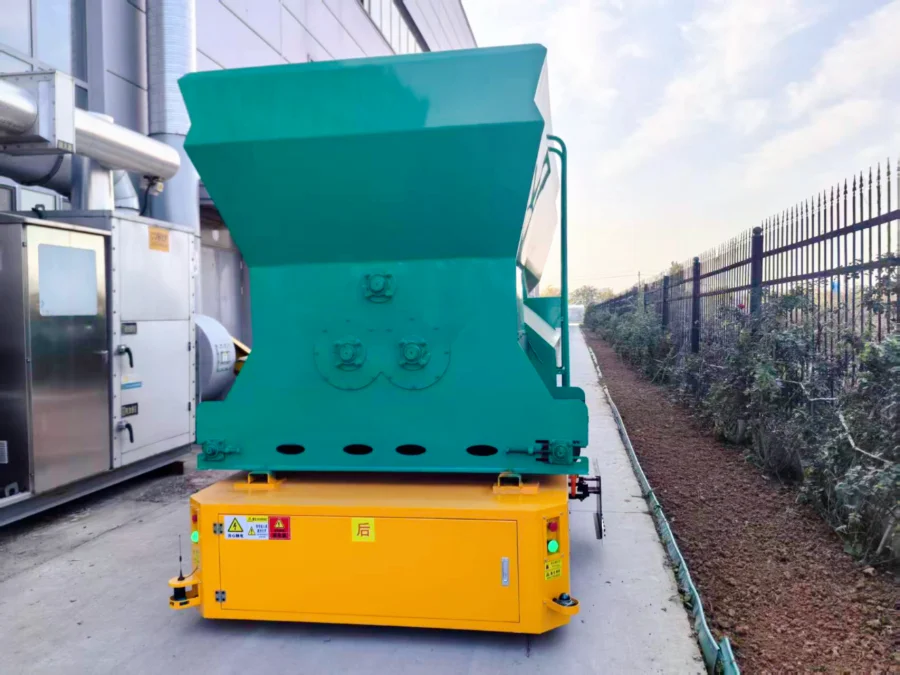
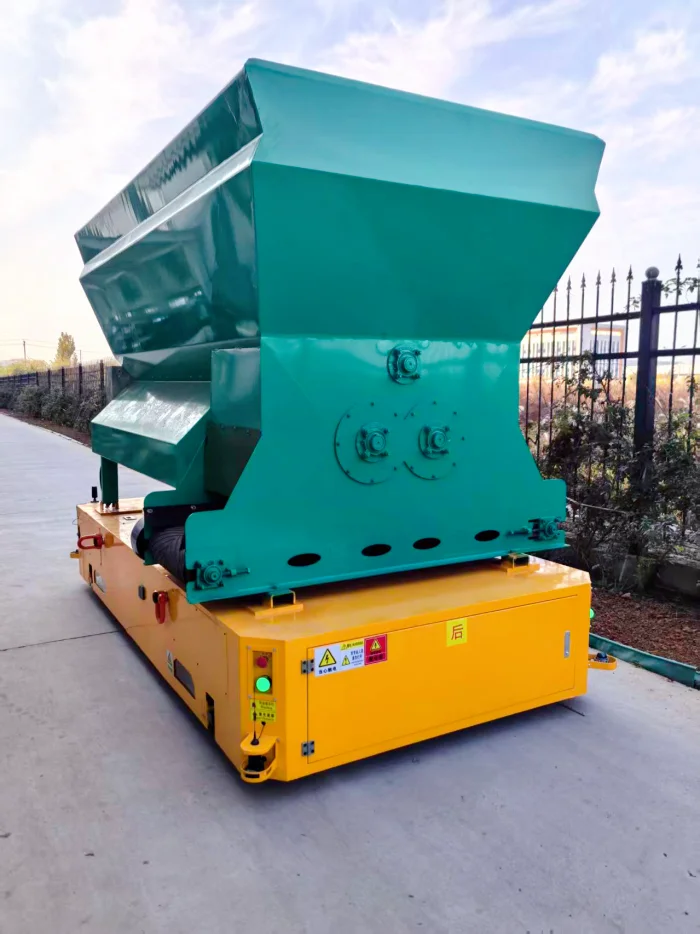
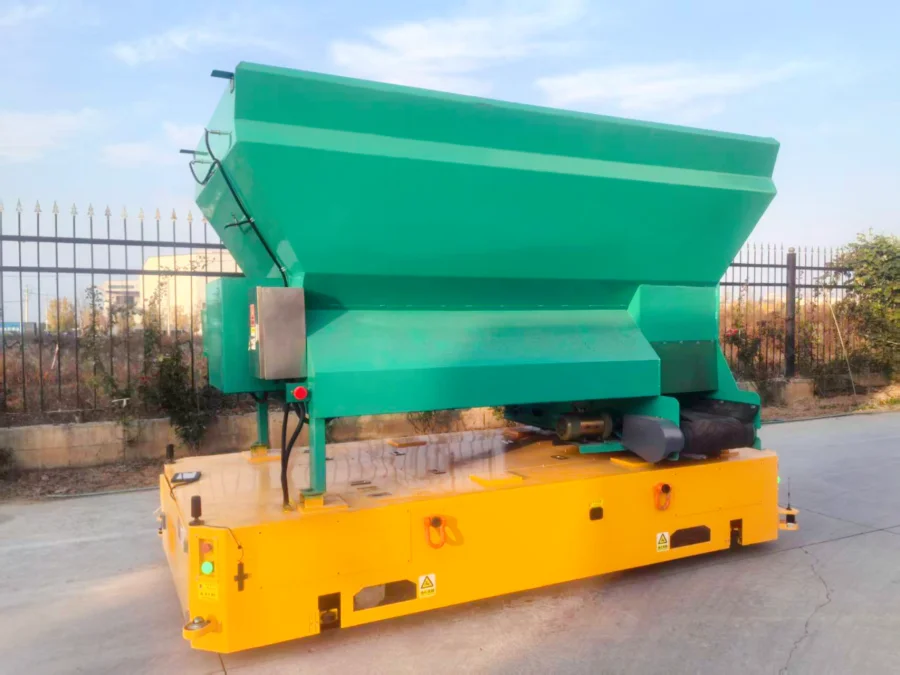
| Core Function | Top Hopper with Automated Discharge |
The Challenges
- Labor-Intensive Process: Reliance on manual vehicles for moving 6-ton loads of feed was slow, required skilled operators, and contributed to high labor costs.
- Inconsistent Delivery: Manual operations led to variable timing and quantities, impacting animal feeding schedules and overall herd management.
- Harsh Operating Environment: The AGV needed to withstand constant exposure to feed dust, moisture, and temperature fluctuations commonly found in agricultural settings.
- Space Constraints: Navigating efficiently through narrow passages in and around barns required a highly maneuverable solution.
Solution
- Unmatched Maneuverability: The all-wheel steering system enables the AGV to turn on the spot and navigate through tight barn alleys with precision, a critical advantage over traditional vehicles.
- Built for the Environment: Its corrosion-resistant construction and sealed drive components ensure reliable performance despite pervasive feed dust and humid conditions.
- Seamless Autonomy: Integrated GNSS navigation provides centimeter-level accuracy for precise point-to-point delivery, while the automatic loading/unloading mechanism completes the process without any human intervention.
- Labor Cost Reduction: Automating a high-volume, repetitive task allowed the reallocation of staff to higher-value animal care activities.
- Operational Efficiency: Consistent, scheduled feed delivery optimized the entire herd management process.
- Enhanced Safety: The comprehensive sensor suite and emergency stops created a safer environment for both workers and livestock.


 EN
EN  ES
ES  PT
PT  FR
FR  RU
RU  KO
KO  DE
DE